

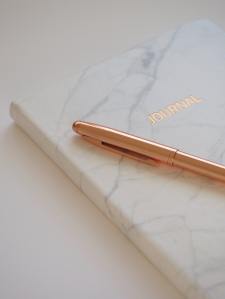
Journaling has long been recognized as a powerful way to reduce stress, relieve depression and anxiety, focus and organize your life. It can be a great tool to meditate on what bothers you and to open and let go. One of the great things about journaling is that you can always create a journal in a way that suits you at home, without the need for much time, resources, or skills. However, journals do more than just write your thoughts on paper. According to a study, a daily diary helps improve mental health and get life back on track, including relationships, future goals, organizations, and even communication paths with partners, children, colleagues, friends, parents or anyone else in your life.
How Does Journaling Help?

Expressing yourself creatively, such as writing in a journal, is a great way to relieve stress and focus on things that aren’t useful to you. You can use the journal to develop and practice healthy habits, set goals and work towards them, and manage your mental health to relieve anxiety, stress, and depression. It can make a big difference to your mental health in just a few minutes a day. There are many reasons why people choose to express their thoughts by journaling. The writing process is therapeutic in nature. It can help you organize your thoughts, express yourself, and process and manage your emotions in a positive and healthy way.
Other benefits of journaling are:
- Stress reduction
- Identify and track goals
- Achieve those goals
- Track issues and help identify triggers
- Find inspiration
- Increase self-confidence
- Overcome fear
- Identify and deal with negative thoughts and behaviors
- Get in the habit of talking to yourself and creating mantras
Where Do I Start?
There are a few things you can do to get yourself ready to go on a journaling journey. The first thing you’ll need is a journal. Here are a few I recommend (go ahead and click on the one you like):


The next thing you’ll need is a great writing pen or pens that will help “invite” you to make journal entries everyday. Here are a few of my favorites (I am a bit of a pen lush, and I have a serious fetish for gel pens):


A Few Tips on Your Journey…
- Make sure you do your best to write everyday. Doing something every day helps make it a habit. Take the time to complete the journal. This can be done each morning, after waking up, in the evening just before bedtime, or during lunch break. Some people think that maintaining a solid, consistent block of time helps them get going. However, in reality, the journal can be retained at any time of the day and does not have to be the same every day. Use the one that suits you best.
- Set aside a time and a specific place, preferrably peaceful, to write. You can write in your journal in a place that feels like a serence and productive space for daily writing practice. It can be whatever you prefer such as comfortable chairs and end tables, a bed with pillows behind, a bathtub, or a park bench. Wherever you choose, just try to make it work best for you.
- Set a time limit or a page limit. If you find the time to create a journal stressful, set goals. Maybe you can first commit to writing 5 or 10 minutes a day. That’s good! Once you get used to the process, work up to 15 minutes, 20 minutes, or even more.
- If you do better ad hoc, flex to meet your own needs. Some people succeed in schedules and formats, but they are not suitable for everyone. If you don’t or don’t need a specific location and time for your journal, that’s fine. In this case, don’t be bound by the coercion that you have to be in a particular special place to write in your diary. If you have a busy or unpredictable schedule, be open to incorporating your journal about when and where it works in your life.
- Write about whatever works for you that day, or try a journaling prompt. If you are writing to help deal with the symptoms of a particular condition, there are some things you can be specific about, depending on what your goals are or according to your treatment plan from a professional (which I am not). Templates or prompts are especially useful to many at first. Journals can be artistic, rhythmic, random brainstorms, bullets, or a combination of everything. There is no specific way YOUR journal has to be in order to meet some regulation (unless your medical professional states otherwise). If you want to draw one day, write a paragraph the next day, and then make a to-do list over the weekend, go for it! Don’t fret about what you’re writing, especially at first. Your goal is to be a habitual writer. Your journal is your own, unique recipe for improving your mental health and well-being. Organize it in whatever way makes the most sense and is the most helpful for you.
- It really IS all about you. There is no grammar police unless you invite them. You can write in script, print, text-speak, shorthand, American English, a Spanish dialect, or pictures. It’s YOURS. Make a path for your thoughts to flow FREELY however they flow. Unless you share your journal with someone (your choice only), there will be no tone policing. Be you!
Remember this…
Journaling may not solve everything you are struggling with, but it is mainly for you to focus, let go of trauma, manage your emotions, and grow to be a better, stronger individual. It can be a great tool to help you work on it. Prompts can make it easier, but remember you don’t have to do it alone. If you find yourself more and more difficult to live a positive, productive and healthy life, it’s probably time to ask for help. Therapy can change overall mental health and well-being, especially when combined with effective techniques such as journals and other self-care strategies.
There are ad links on this page that are Amazon Associate links. By clicking these links and purchasing the items, I may become eligible to receive a commission payment from Amazon.
If you need any further reason to subscribe, try reading one of these…
- What Did You Learn?
- 5 Steps to Tame HANGER!
- Unlocking Your Potential: Embracing the Power of Self-Belief
- Title: Embracing Mindful Consumption: Finding Balance in a Digital Age
- 10 Things to Eat for Breakfast on the Go
Did you like this blog? Rate it with the stars below.

 Who The Kel?
Fantastic read! I really need a stressed journal after this workday. Glad to see you writing again!!
LikeLike
I’m typically a fountain pen person, but when it comes to gel pens, you really can’t go wrong with the Signo DX or the Energels. Great choices there. I’ve maintained the journalling habit for some three years now, and it’s such a great way to know myself. Anyway, thanks for this post!
LikeLike